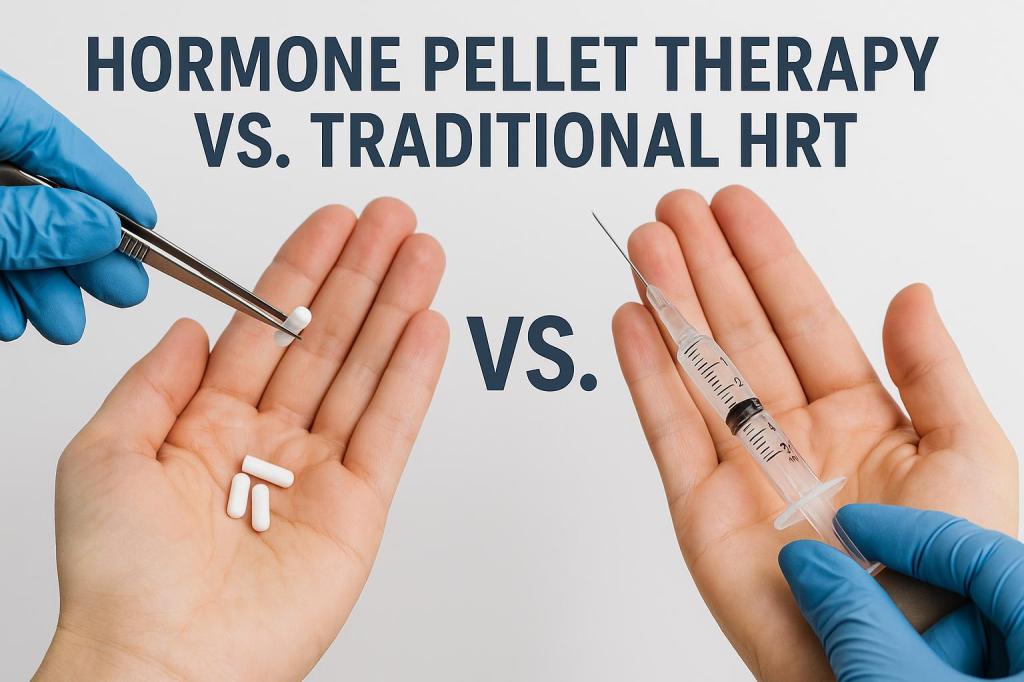
Falling estrogen or testosterone can sap energy, erode bone, and dim mood. Two popular ways to restore balance are Hormone Pellet Therapy and traditional hormone replacement therapy (HRT) delivered by pills, patches, gels, or injections. This guide from Renew You Medical Wellness lays out how each option works, what benefits to expect, and how to decide which fits your life.
What Is Hormone Pellet Therapy?
Hormone Pellet Therapy (often called Hormone Pelleting) uses rice-sized cylinders of bioidentical estrogen, testosterone, or both. A trained provider places them beneath the skin of your hip or lower abdomen during a quick office visit. Pellets dissolve over three to six months, giving a steady hormone stream.
Highlights
- Plant-derived hormones crafted to match human chemistry.
- Dosing is customized to lab results, weight, and symptoms.
- Only two to four insertions a year mean minimal daily upkeep.
How Does Traditional HRT Work?
Traditional HRT supplies estrogen, progesterone, or testosterone through oral tablets, skin patches, topical creams, nasal sprays, or intramuscular shots. The delivery route shapes how fast hormone peaks and how long relief lasts.
| Method | Dosing Schedule | Why Patients Like It | Caveats |
| Oral tablets | Daily | Easy to start and adjust | First pass through liver may raise clot risk |
| Transdermal patches | Twice weekly | Steady levels, bypass liver | Skin irritation in some users |
| Topical gels/creams | Daily | Discreet, flexible dosing | Risk of transferring hormone to others |
| Injections | Every 1–4 weeks | Infrequent dosing | Level swings near end of cycle |
Benefits and Drawbacks at a Glance
Reasons Patients Choose Hormone Pellet Therapy
- Stable levels can smooth mood, libido, and cognition.
- Low maintenance suits busy schedules or frequent travelers.
- Bioidentical formula appeals to those seeking “body-identical” hormones.
- No daily pills so adherence is almost automatic.
Reasons Patients Choose Traditional HRT
- Fast dose changes if symptoms persist or side effects appear.
- No minor surgery so needle-averse patients feel at ease.
- Wide price range with many generics covered by insurance.
- Multiple formats let you mix and match routes if needs evolve.
Lifestyle Factors to Consider
- Memory for daily tasks – Pellets reduce the chance of missed doses.
- Cost and coverage – Check insurance benefits and pellet provider fees.
- Medical history – Liver disease may steer you toward patches or pellets that bypass first-pass metabolism.
- Travel or shift work – Level swings from injections may feel harsher when sleep is irregular.
- Personal goals – Muscle gain, bone density, or hot-flash relief might respond differently to each method.
Partnering with Renew You Medical Wellness helps you weigh these factors using detailed labs and symptom tracking.
Frequent Monitoring and Follow-Up
Regardless of method, regular bloodwork ensures your dose stays safe and effective.
- Pellets: Baseline labs, six-week check, then each insertion cycle.
- Oral or transdermal therapies: Baseline labs, three-month check, then annual or symptom-driven reviews.
Adjustments are common during the first six months, so keep follow-up visits on the calendar.
Frequently Asked Questions
Is Hormone Pellet Therapy safer than pills or patches?
Safety varies by individual. Pellets avoid the sharp peaks and troughs seen with some pills or injections, which may reduce mood swings. Yet any hormone therapy carries potential risks such as breast tenderness, fluid retention, or rare clotting events. Review your personal and family history with a qualified provider before deciding.
Who should avoid Hormone Pelleting?
You may need another approach if you have bleeding disorders, uncontrolled cardiovascular disease, or cannot limit strenuous activity for a few days after insertion. Severe needle anxiety can also be a factor.
How long before I feel results with pellets?
Most patients notice better sleep, mood, and libido within two to four weeks, though full benefits can take up to three months. Traditional HRT may act faster or slower depending on route and dose. Patience plus follow-up labs is key.
Can I switch methods if I am unhappy?
Yes. A knowledgeable provider can taper or transition you safely from pellets to patches, from injections to gels, or any other combination. Clear communication about symptoms speeds the process.
Will hormone therapy affect fertility?
Premenopausal patients should use reliable contraception because either therapy can alter ovulation. Discuss family-planning goals with your clinician before starting treatment.
What side effects should I watch for?
Call your provider if you notice severe breast pain, persistent acne, unusual hair growth, shortness of breath, or swelling in one leg. Mild bruising after pellet insertion or minor skin redness from a patch usually resolves quickly, but report anything that worsens.
Lifestyle Habits That Boost Hormone Success
- Balanced diet: Lean protein, colorful produce, calcium sources, and omega-3 fats support bone and heart health.
- Strength training: Two or three sessions weekly help maintain muscle and insulin sensitivity.
- Stress management: Mindfulness, yoga, or breathing drills keep cortisol in check, aiding hormone harmony.
- Seven to nine hours of sleep: Hormone regulation depends on a robust circadian rhythm.
Final Thoughts
Both Hormone Pellet Therapy and traditional HRT can reignite vitality, clarity, and joy when hormones decline. Your perfect fit hinges on biology, lifestyle, and personal preference. Renew You Medical Wellness blends cutting-edge diagnostics with compassionate coaching to help you choose, monitor, and adjust treatment for the life you envision.
Disclaimer: This material is for educational purposes only. Consult a licensed healthcare professional before starting or altering any hormone regimen.
 Renew You Blogs